Roof Edge Protection
Falls From Height Kill More Construction Workers Than Anything Else in Britain. Is Your Roof Safe to Work On?
We design and install guardrails, walkways, and fall arrest systems, integrated with your waterproofing, compliant with CDM 2015, and installed without compromising your roof membrane.
Falls From Height: The UK’s Number One Killer in Construction
According to the HSE, falls from height account for more workplace fatalities in Britain than any other single cause. In 2023/24, 50 workers were killed by falls: many from commercial rooftops during routine maintenance.
If contractors, engineers, or maintenance teams access your roof, even occasionally, you have a legal duty to provide safe access, edge protection, and defined walkways. Most building owners don't realise this until something goes wrong.
A proper rooftop safety assessment costs a fraction of a prosecution. And it might save someone's life.
Common Hazards We Find
- No edge protection around roof perimeters
- Fragile rooflights with no guarding or marking
- No defined access routes: contractors walk on the membrane
- Corroded or non-compliant existing guardrails
- No anchor points for personal fall protection
- No rescue plan in place if someone does fall
- Plant areas accessible without any safety provisions
What We Install
Rooftop safety systems designed by waterproofing specialists: no penetrations, no compromised membranes.
Edge Protection & Guardrails
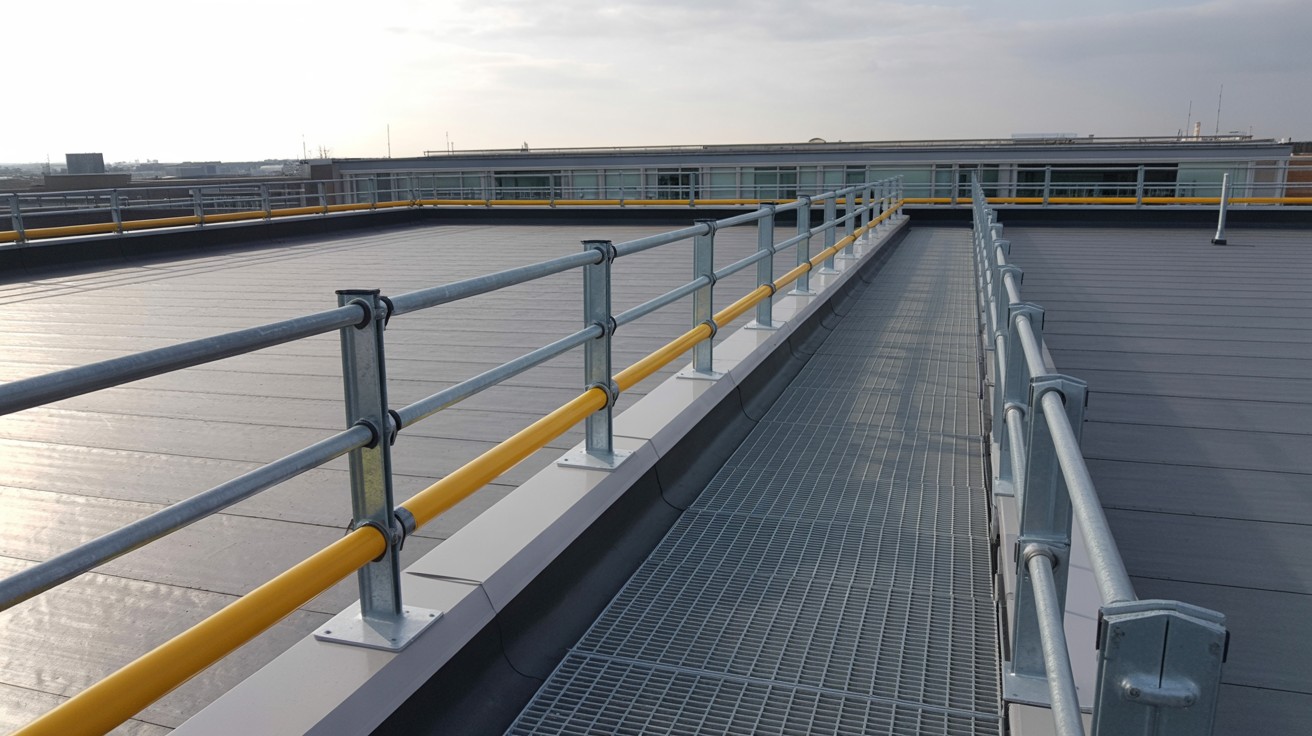
Permanent free-standing or fixed guardrail systems to BS EN 13374, providing collective fall protection around roof perimeters, plant areas, and fragile rooflights.
Walkways & Access Routes
Non-slip GRP or aluminium walkway systems that protect the membrane from foot traffic damage while providing safe, defined access routes to plant and equipment.
Fall Arrest Anchors
Single-point and horizontal lifeline anchor systems compliant with BS EN 795. Installed without penetrating the waterproofing membrane using weighted or bonded base plates.
CDM Compliance
We design safety systems in accordance with CDM 2015, the Work at Height Regulations 2005, and BS 5395. Full documentation and handover packs provided.
Integrated With Waterproofing
Unlike standalone safety contractors, we understand how safety systems interact with your waterproofing. No penetrations. No compromised membranes. No voided warranties.
Rescue Plans & Training
Every installation comes with a site-specific rescue plan and can include user training for your maintenance teams and contractors.
Why a Waterproofing Company Does Safety
Most safety system installers bolt through the roof membrane. It’s quick, it’s easy, and it creates a leak path. The building owner then has two problems: a safety system that may void their roofing warranty, and a roof that now leaks around the fixings.
We specify and install safety systems as part of the complete rooftop package. Every guardrail, walkway, and anchor is designed to work with your waterproofing, not against it. Free-standing systems. Bonded base plates. No penetrations.
Your roof stays watertight. Your people stay safe. Your warranty stays valid.
Commonly Asked Questions
Am I legally required to have safety systems on my flat roof?
Under the Work at Height Regulations 2005, the duty holder (typically the building owner or managing agent) must ensure that work at height is properly planned, supervised, and carried out safely. If anyone accesses your roof for maintenance (HVAC engineers, window cleaners, telecoms installers) you have a legal duty to provide safe access. Collective protection (guardrails, walkways) is always preferred over personal fall protection (harnesses).
Can you install guardrails without penetrating my roof membrane?
Yes. Free-standing guardrail systems use weighted base plates that sit on the membrane without any fixings, bolts, or penetrations. They comply with BS EN 13374 and can be installed in a single day without disrupting the waterproofing system. This is our standard approach to protect your existing warranty.
What about fragile rooflights: are they a hazard?
Fragile rooflights are one of the biggest hidden dangers on any commercial roof. Many older GRP rooflights become brittle with age and can no longer support the weight of a person. We install perimeter guardrails around rooflights and can also replace fragile panels with non-fragile alternatives as part of the works.
How much do rooftop safety systems cost?
Guardrail systems typically cost £80–£150 per linear metre installed. Walkway systems run from £120–£200 per linear metre. Fall arrest anchors cost £300–£600 each installed and tested. We provide a complete priced specification after survey: no hidden costs.
Who is responsible if someone falls on my roof?
Under CDM 2015 and the Health and Safety at Work Act 1974, the building owner or duty holder can be held criminally liable if a person is injured or killed due to inadequate fall protection. The HSE takes falls from height very seriously: penalties include unlimited fines and custodial sentences. A proper safety assessment is the first step to managing this risk.
Can you carry out a safety audit on my existing rooftop systems?
Absolutely. We provide independent safety audits that assess your current rooftop safety provisions against the Work at Height Regulations 2005, BS EN 13374, and CDM 2015. You’ll receive a written report with prioritised recommendations and costings. This is often the most cost-effective first step.
What Our Clients Say
“We manage 40+ commercial properties across the South East. Vanguard surveyed our entire portfolio, gave us a prioritised maintenance plan, and have been managing the programme ever since. The reporting alone saves us hours every quarter.”
Portfolio Director
Managing Agent, WGP Maintenance
“We’d been patching the same warehouse roof for three years. Vanguard assessed it, specified a full overlay system, and delivered it in two weeks. Fixed price, no extras, full documentation. Exactly what we needed.”
Facilities Manager
Facilities Management, Accor Hotels Group
Trusted By Leading Organisations